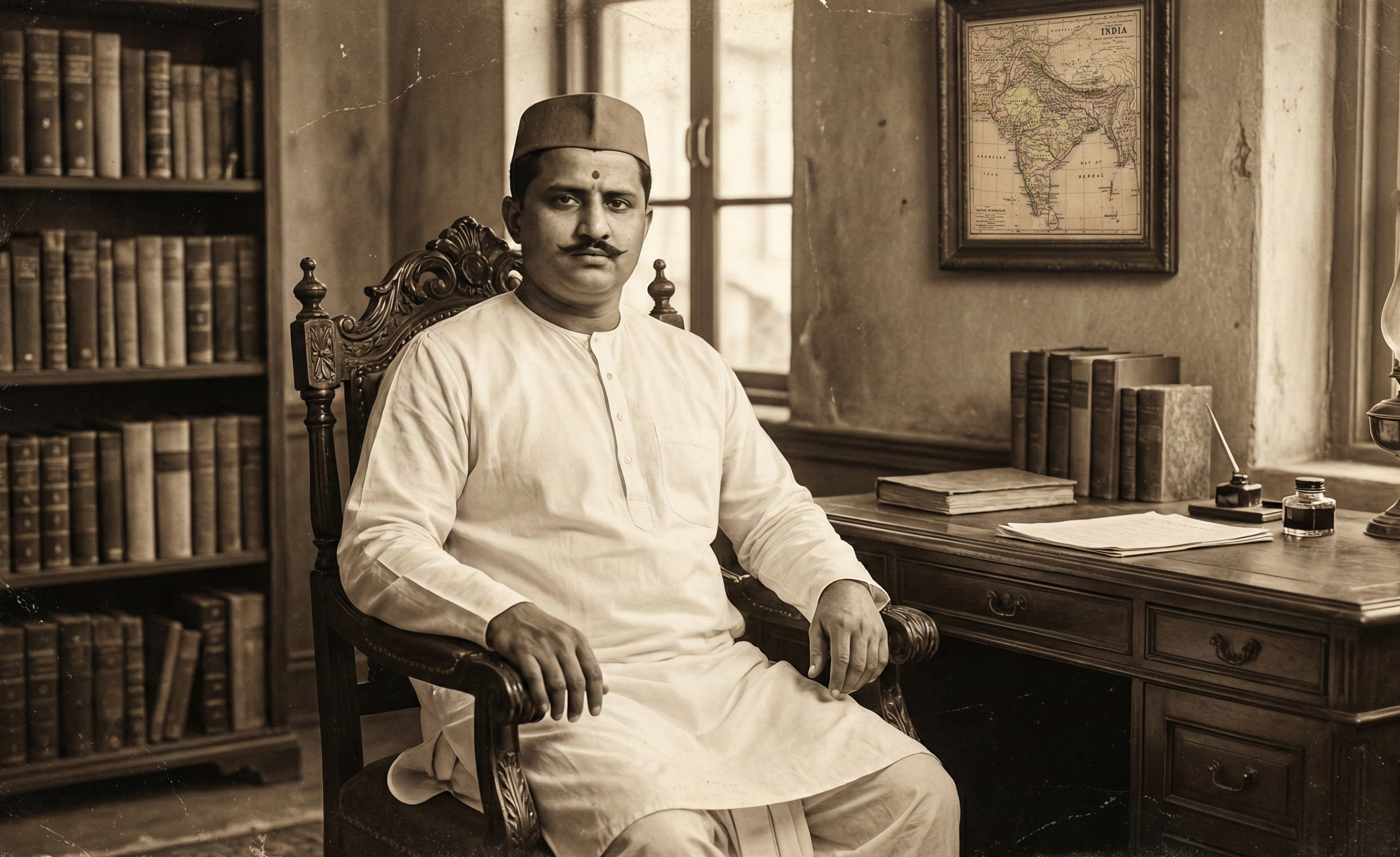
Bismil
If I must die for my nation a thousand times, I shall never count it as suffering.
He was waiting outside the gate of Gorakhpur central jail because the guard did not allow him to enter. He knew, without her, he will not be allowed to enter the premises. Hence, he was waiting for her to come. At last, after a long wait, she arrived. She was looking weak and very old but there was firmness in her walk and glory on face. She knew him. She introduced him as her nephew and requested the security guards to allow him to meet the prisoner. The guard took him to the prisoner, and the lady followed. The Lady met the prisoner and there was an emotional, spiritual conversation. During the conversation, the prisoner passed the bundle of pages in the tiffin box that was brought by the lady. He – the man who was introduced as nephew to lady - closed the tiffin and moved out hurriedly from the central jail. From there he directly went to press, to publish those pages. He wanted to publish as early as possible.
It was a day of 18th December 1927, the man who was waiting outside was Shiv Verma, a close friend of prisoner, the lady was mother of the prisoner who was going to be hanged till death on the next day (19th December 1927), and the prisoner was “Ram Prasad Bismil”.
The pages “Shiv Verma” carried away to get printed – was actually a manuscript of autobiography written by Ram Prasad Bismil. Ram wrote that in his last days of jail and finished it three days before his death.
Interestingly, when the autobiography was published as a book, the Britishers immediately took possession of the printed copies and also banned the re-publication further. Only after India’s independence, it was re-printed by a small group and made available to public.
Ram Prasad Bismil was martyr and famous for Mainpuri (1918) and Kakori (1925) conspiracies, against british rule. Some of us know him by his poems, or as a revolutionary. He was leader, sophisticated strategy maker, an excellent poet, and inspiration for others.
Where non-violence is used as propaganda from people in power after India’s independence to sideline the sacrifice of the individuals who took another route for freedom, there were many such individuals who spent their entire life for freedom struggle unknown to the world but played significant role in inspiring others, are now just part of history but not even part of history books taught to us in school.
It was his courage to write down the autobiography when death was inevitable in few days. He took the opportunity to write what he could, by utilizing best time in cell. While reading, we know that it was written in prison cell, but reader will not find any instance of weakness in his writings. Also, reading this autobiography will not take much time but surely will give inside of the individual who spent his life for freedom struggle. He wrote the book neutrally and judged his life from a third dimension.
His last words in autobiography were:
मरते ‘बिस्मिल’ ‘रोशन’ ‘लहरी’ ‘अशफाक’ अत्याचार से । होंगे पैदा सैंकड़ों इनके रुधिर की धार से ॥
An auto-biography worth to read.
Thus said Dinesh Gajjar
Published at 1:35 pm, Jan 28th 2013