That fine unique problem, You want to solve
Technology depends on Humanity at core to solve the problem
The first two weeks of 2026 started with a 12-day tour, including a road trip covering approximately 2,000 km. First, I attended a business conference from January 2nd to 7th, and then from January 8th to 12th, I went on a personal pilgrimage tour. During this journey, I visited many places and cities spread across two states in western India. The highlight of the tour was reaching the top of a religious mountain using a ropeway.
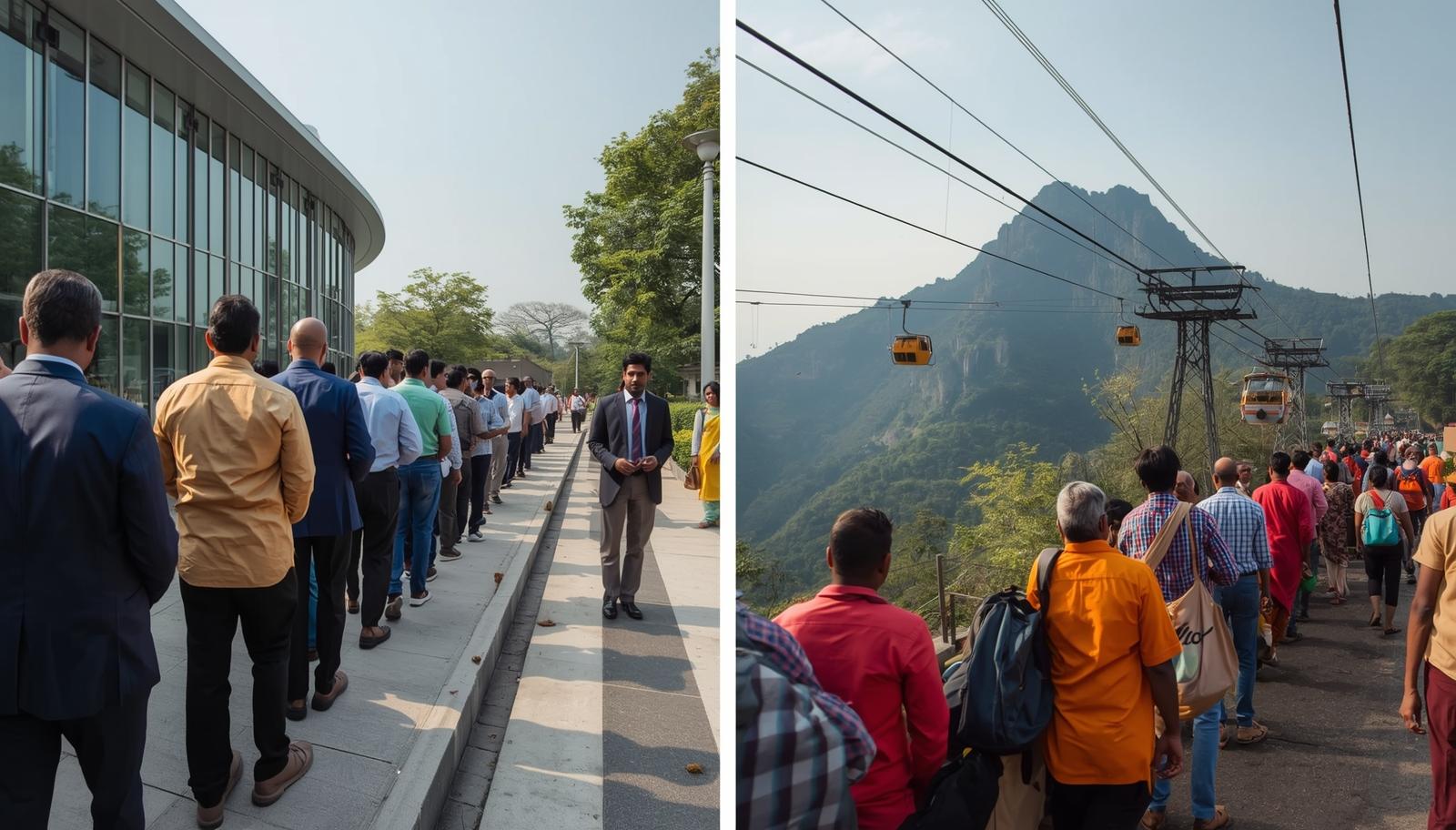
The business conference and reaching the mountaintop were two different purposes with two different experiences, but they had similar observations. The business conference was backed by the government and organized by a well-known large organization. The ropeway system was established and managed by a large company that has been operating for many decades and recently started this ropeway operation at this mountain. Although it looks like two different objectives visited by two different audiences (entrepreneurs vs. devotees), the core problem was—and is—the same.
Both have excellent infrastructure and sufficient funding, but at their core, what they missed is the experience of the individual going through it. They may have considered this, but it was not reflected in how they organized things. The conference lasted 3 days, and the ropeway runs every day. But both missed the point that technology or infrastructure won’t solve the problem if the human experience of those attending is not considered.
At the conference, there was no clarity about how many halls there were, where they were located, what events would be held one by one, where workshops would be conducted, and most importantly, where the food kiosks were. The conference had excellent halls, big screens, and nice sound systems, but no thought was given to the user (attendee) journey at its core. So, even on the last day of the conference, people kept asking what was being held where. You can imagine how the organizers messed up when welcome kits were given on the last day of the event to those who claimed them—if people didn’t know about them, the kits must have been returned unused.
The ropeway system solved the major problem of the religious mountain, as it covers the path in a maximum of 8 minutes. Without this, for many centuries, it was difficult or unattainable for many people in their lifetime. The ropeway made it possible. The problem is not with the ropeway system itself—it is well-designed, properly organized, uses good infrastructure, and solves a centuries-old problem. The problem is the experience of the pilgrim from the moment they decide to use the ropeway until they return. The journey to board the ropeway car is full of hurdles. From the very first question—how to buy a ticket? where to buy it? what time? when to buy a ticket near the ropeway station and when to buy it from a location 2 km away? what kind of payment is accepted? card, cash, or UPI? Is card/UPI supported when you take a single-side journey from the mountain top? Why are there two different queues? What is the offline queue and the online queue? What facilities are available for elderly or people with special needs? Once a person buys a ticket, they may have to stand in queue for hours depending on the rush that day, and there are inadequate facilities for standing in queue. If there were priority queues for elderly people or people with children, they were not easily visible.
There can be arguments that these are trivial issues but the main problem is being solved. True, but when we have solved big problems, why are we leaving small (solvable) problems unattended? At every step, a person has to keep asking questions of staff or security personnel, who may or may not have answers. If you relate to the observed problems and find that they exist in other situations, then you also understand the agony a person goes through. How to solve it? The first step is to understand the problem by navigating through the user’s journey (by putting yourself in the user’s shoes). Understand the problems users face as soon as they enter the premises or when they register (buy tickets or register online for an event). If organizers or facilitators try to solve the first problem and repeat the cycle for each next step until the user exits the system, most problems will be taken care of. This will save many people from an agonizing journey and make them happy to attend.
It’s important to note that at both the event and the spiritual place, there were a significant number of visitors on the higher side of age (from 50 to 80). So, it is our moral duty to make sure their visit becomes smooth.
Searching for that Killer Idea
Founders and entrepreneurs are always looking for that one unique problem or killer idea that will revolutionize a generation. But sometimes, the problem is right in front of us, and we might overlook it because it looks trivial. However, solving that trivial problem may help thousands of people. You never know!
Thus said Dinesh Gajjar
Published at 10:15 am, Jan 24th 2026 from Home, Sarvodaya Anand