
Library and Society
Society needs habit of reading
A man who reads lives a thousand lives. A man who does not reads only one. And sometimes, that one life is not enough Abraham Lincoln
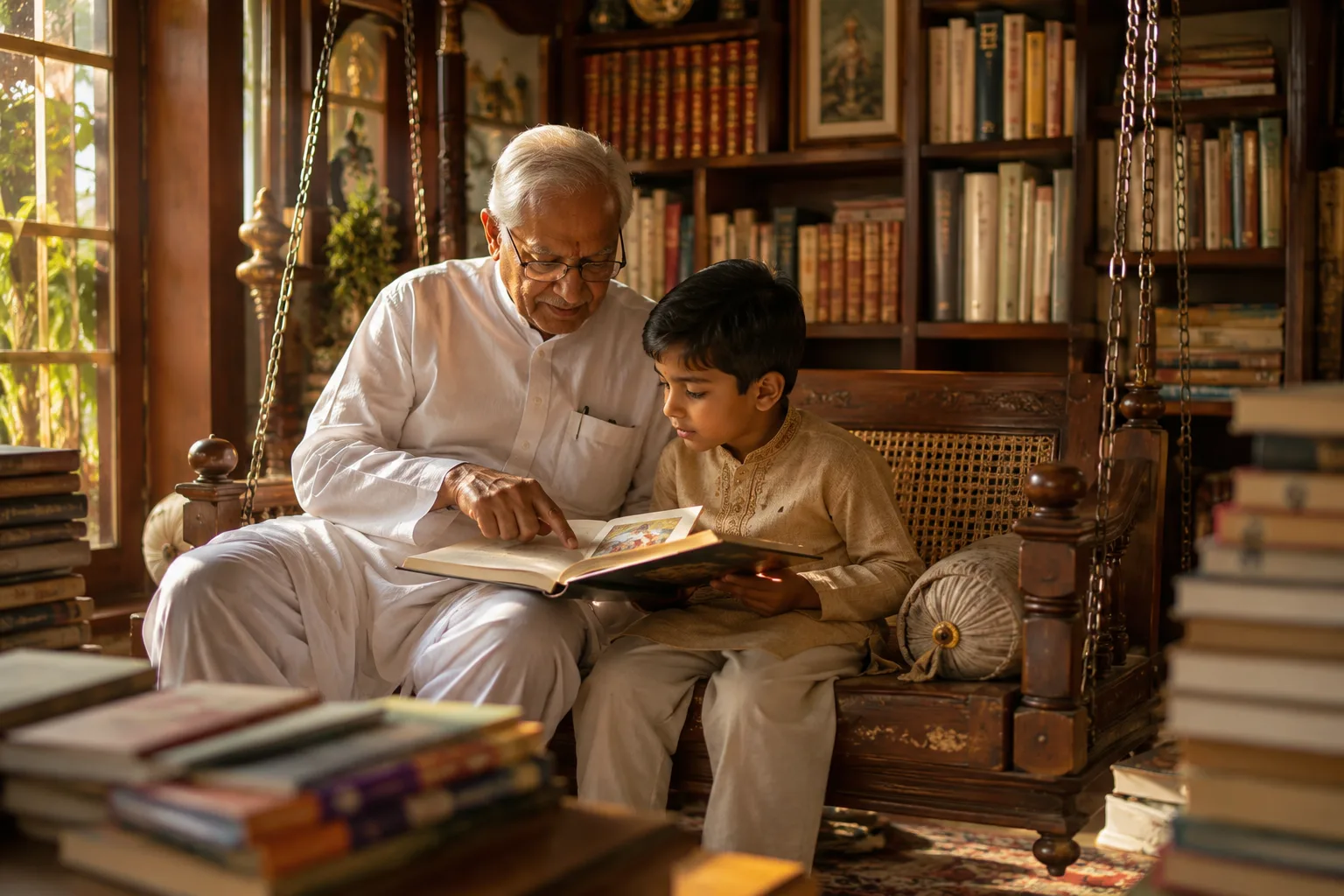
I like the smell of books. Whenever I see books, there is an unimaginable, invisible attraction. Food does not attract me as much as a shop filled with books does. Even today, while passing somewhere, if I see a bookstore or a library, I feel like going there. This habit of reading books and this attraction toward them came to me from my father. Without giving any sermons, he simply kept bringing books home and, whenever he had time, under the open sky and beneath the stars, he would tell stories in his own way and say, “Do you know where this is? In this book,” and then tell us the name of the book. He kept building that curiosity, and it did not happen in a single day. Slowly, so slowly that we never even realized when it entered our veins. But it all began with comic books, and gradually those words started painting pictures of imagination, and that continues even today.
I have read many books, and I feel that some of them would be difficult to adapt into films or plays. Because the way they were written (and the time in which they were written), their purpose was quite different. Today, many authors write books in such a way that one can easily turn them into a film script, but it was not like that before. They were not merely a means of entertainment; many times they became sparks of revolution, and many times they became a major part of change — whether that change was political, social, or educational. One example is Uncle Tom’s Cabin. Those who have read it know. But that is only one book. There are many such books that have left a mark on society and on human life. Many of these books lie printed and preserved in libraries. It may not be possible for all of us to bring books home from the library, but we can at least go to the library, can’t we? That is why libraries exist. And within these libraries lies a treasure — not only of entertainment but of intellectual strength. They teach us how to think, not what to think. They satisfy the hunger of the mind. They are the longest conversation in human history, lying there in libraries gathering dust.
I once read that you can judge what a society is like by looking at how many orphanages, old-age homes, hospitals, schools, and libraries it has. If there are too many orphanages and old-age homes, that is not the sign of a good society. On the contrary, if a society has more schools and libraries, it may fit the definition of a good society. But now libraries are going through difficult times. First came television, then mobile phones, tablets, and now AI. One after another, all of these have enthusiastically taken on the task of making libraries obsolete.
AI has reached a point where it can now write a book for you. You express an idea, and it will write a book around it. But in doing so, it is unconsciously taking away a very significant right from human beings — the right to think, to analyze, and to express the emotions that arise within the heart.
So the responsibility now lies with us. We cannot eliminate AI or its use, nor should it be eliminated. What matters is its wise and thoughtful use. And that very word is important — “wise”. This is our greatest challenge: where we choose to direct our steps, and where we choose to lead the coming generations. Those very steps will determine the future of humanity.
The question is: how will we do it? And the deeper, defining question is: do we truly want to do it?
Thus said Dinesh Gajjar
Published at 12:11 am, May 31st 2026 from Home, Sarvodaya Anand