The power we have neglected for so long
freedom struggle series
What if I told you that,
- Brands like “Stuart Weitzman” and “Christian Louboutin” are today considered among the top names in women’s footwear. But did you know that there was a time when women were forbidden from wearing slippers? Wearing shoes was associated with religion and considered a sin. Especially for women?
- If she was born into a particular caste, she could not even wear a blouse?
- Doctors and scholars demanded that women riding bicycles should be prohibited on moral grounds, and women’s cycling was considered a threat to society. This Was ideology prevalent in European countries.
- Women had to cover their teeth while laughing, and a woman who laughed with her mouth open in public was not considered to have good character?
- Even until 1945, women were denied entry into the Royal Society at Cambridge as fellows?
- Even in countries considered modern, women received voting rights much later than in countries labelled developing?
- In Paris, a law technically prohibiting women from wearing trousers remained in force until it was formally repealed in 2013. Various states and workplaces in the United States also restricted women from wearing trousers well into the twentieth century.
- In some parts of Nepal, women were sent to huts during menstruation. Some women died because of the cold or attacks by wild animals. This practice was criminalised only in 2017, and it continues even today.
All of this that has been written is not even one per cent of the history of human life, and it covers only the last two centuries. If you go further back, you will find so much that you will wonder, how could this be? Even in the last 100 years, there are examples that will shock you when you see and read about them.
The point is that someone who has no pain has no understanding of the suffering of someone who is in pain. While democracy was being advocated in Britain, women there were still not independent in many important matters. In simple words, when people themselves face difficulties, they feel that a revolution should happen.
The important point is that when difficulties arose — when they themselves faced difficulties — they set out to find a solution. But when someone else faces difficulties and you make an effort to help them come out of those difficulties, it is a noble act and worthy of appreciation. Such extraordinary individuals have changed history. Some European societies have a not-so-distant history in which women who knew how to read and write were labelled witches and put to death. Why go so far? Even in India, barely a hundred and fifty years ago, women in their own homes did not have the right to education. If you want to know more, read the biographies of Mahatma Phule and Savitribai Phule. You will learn about the hardships they endured while lighting the torch of revolution.
But when it comes to improving the condition of women (not just through education), granting them the formal authority to make decisions, and allowing them to work, men subconsciously start issuing orders. Subconsciously, they decide that this is a woman’s job.
The important point here is that an empowered man has authority (how did this authority come about? It was generally accepted that because someone is a man, he is entitled to authority. We will discuss this subject sometime in the future.) And this authority demands responsibility, but that understanding has not developed.
If we restrict the issue only to women’s rights, men, in general, have not been tolerant towards women. When education came and awareness increased, should this discrimination and intolerance not have decreased? Or why does this hidden fear of women’s independence (Fear of Freedom) exist? Its roots do not lie in a single decade, but in centuries of history and in the way the human mind has been programmed.
The societies and cultures that have seen women not merely as an object, but as a source of power, are the societies and cultures that have progressed. The Vedic society of India can be considered a good example of this.
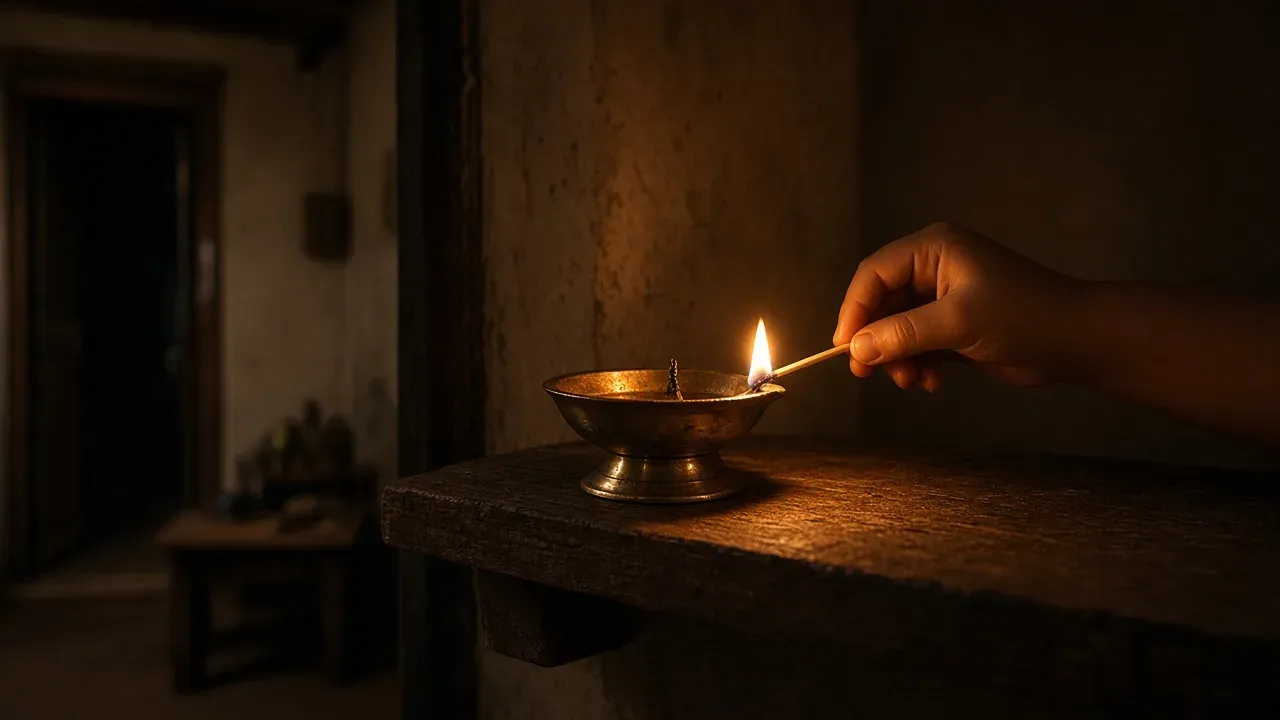
On the first day of Navratri, the power worshipped by the Vedic tradition resides in all our homes in different forms, lying dormant. It is our responsibility to awaken that power. Not only that, the men in the household (whether children or elders) also need to be educated about why that power is called Shakti. That power (mother, sister, wife, daughter or daughter-in-law) must also be educated about how the power within her can be used for the development of the family and society. This revolution must take place at the very roots of our thinking. We will have to face very difficult and uncomfortable questions and find answers to them.
Many problems of human life will be resolved when this power is awakened. If we do even this much within our own homes, we will realise that unprecedented positive changes can be seen in life.
Essence
It may be possible not to worship, but there should be no disrespect — something that continues to happen constantly, at every time and in every place today.
A Gem of Wisdom
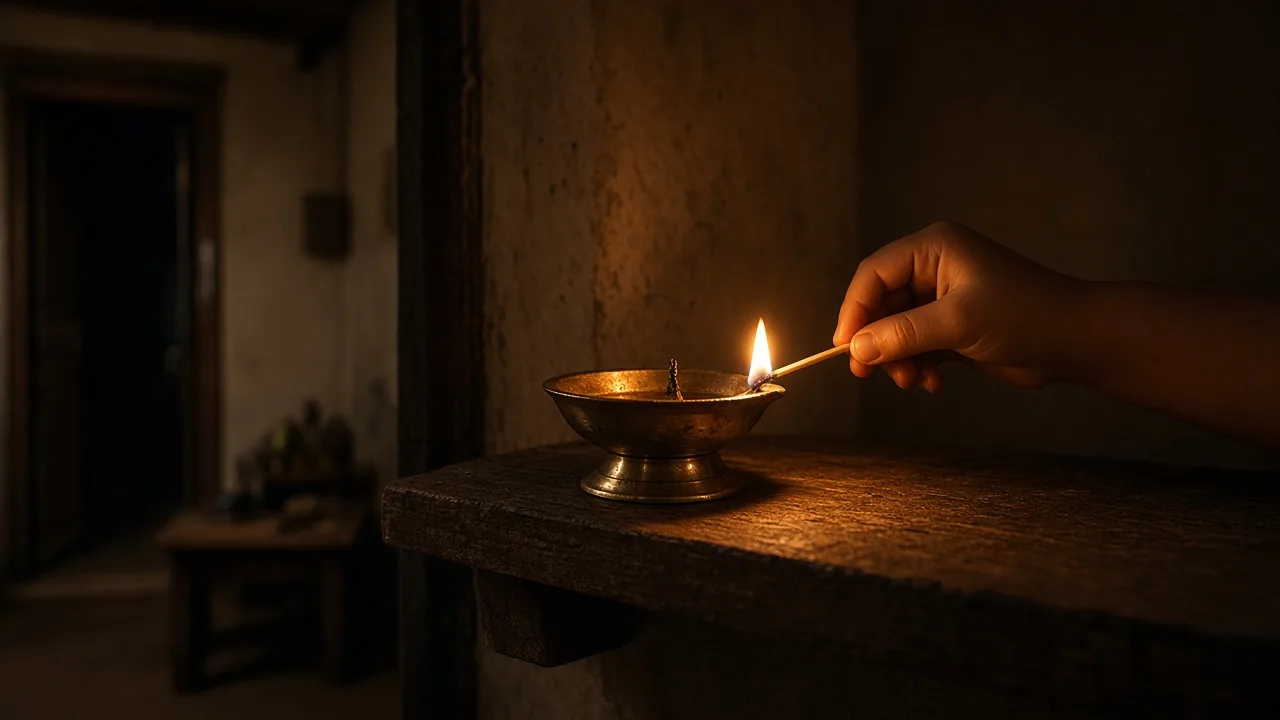
There was a beautiful lamp in a house. The lamp had been carefully preserved in the house for generations. The family considered it precious, worshipped it during festivals, and proudly showed it to guests.
But for years, no one had ever lit the lamp.
One day, the house became dark. The family began looking for light. Some bought expensive candles, some brought lamps from outside, while others simply accepted darkness as a part of life.
Then a child in the house asked, “We have such a beautiful lamp. Why don’t we light it?”
The elder of the house replied, “This lamp is special. It is meant to be preserved, not for everyday use.”
The child asked again, “But what is the point of preserving a lamp that cannot remove darkness?”
The elder had no answer to this question.
That day, for the first time, the lamp was lit. The light that had been inside the house for years spread throughout the entire home.
Thus said Dinesh Gajjar
Published at 11:00 pm, Sun Oct 11th 2026 from Campal, Panji.